A Depot owned by professional Vietnamese tour operators, which is for any travelers who may need any travel stuffs!!!
Showing posts with label vietnam travel depot. Show all posts

Feb 23, 2010

Explore Can Gio Mangrove Forest with Vietnam Travel Depot

Depart from Ho Chi Minh City and drive to Can Gio Mangrove Jungle, almost ruined by bombings and defoliants sprayed during the war time, but has been fully recovered and sustainably developed after several years of reforestation.

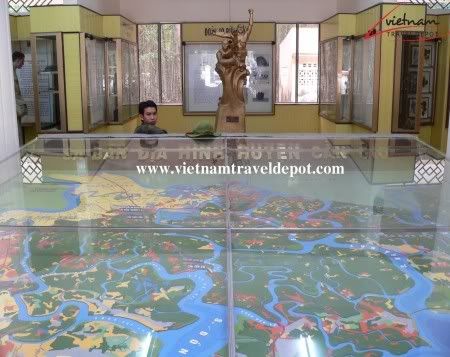
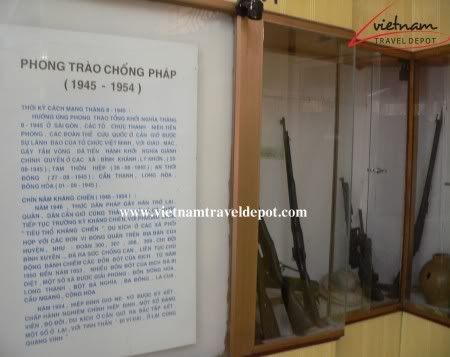
8.30 AM Arrive at Forest Park (Monkey island), we never miss Can Gio Museum that displays antiques dating back 2,000 years.


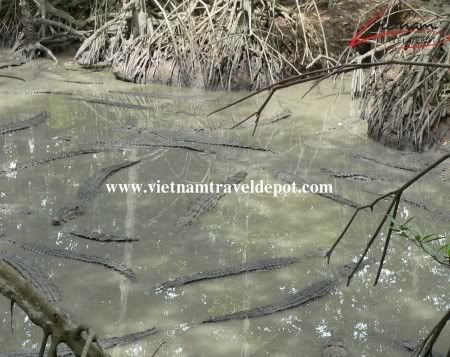
Then heading to visit Mangrove Forest Park Fauna Conservation: observing the wild life of Salt water crocodiles, wild cats, otters, pythons, deers, and more than 1000 wild monkeys. that are always ready to have fun with people. After that, enjoy some shows with tamed and untamed beasts, including crocodiles in Animals Circus ( 09:00 on Saturday, Sunday and Holiday).


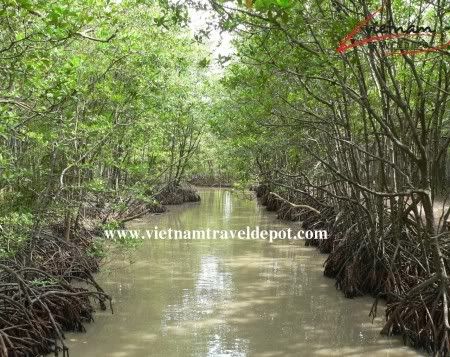
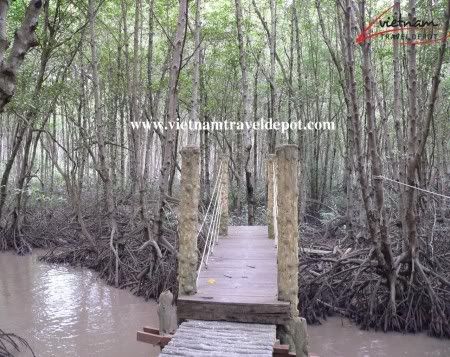
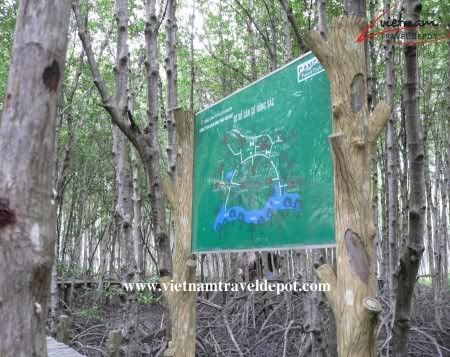
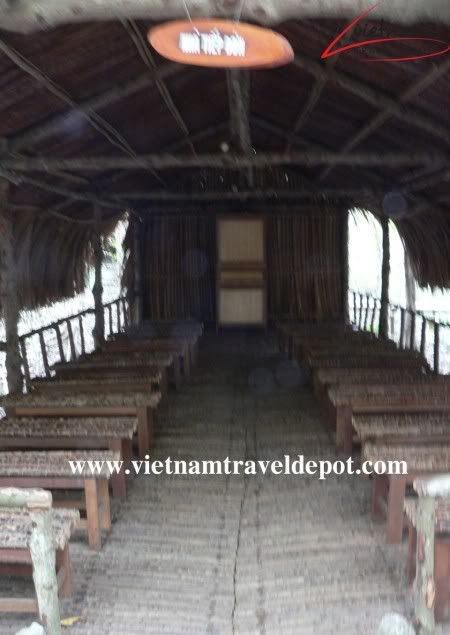
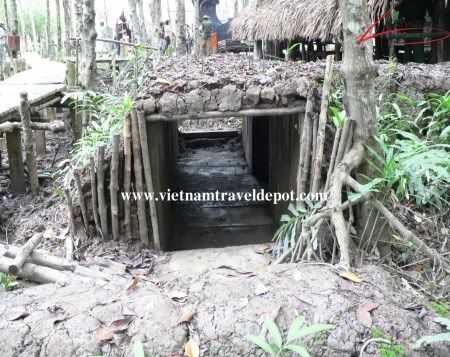
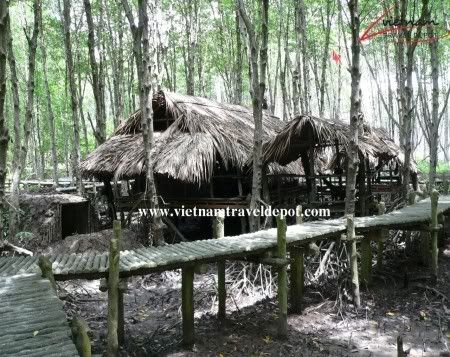
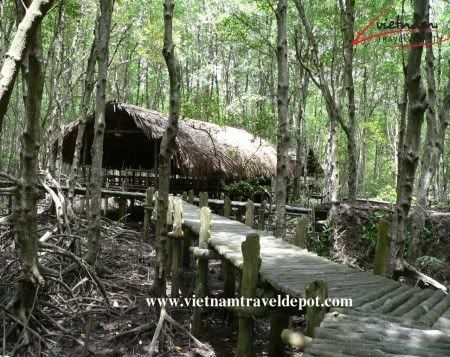
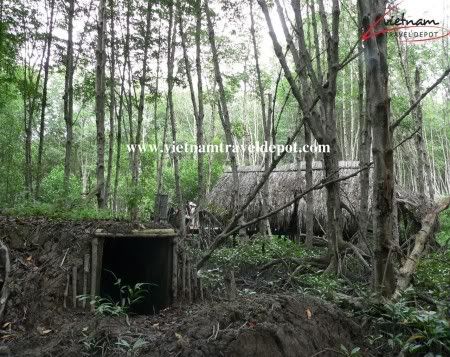
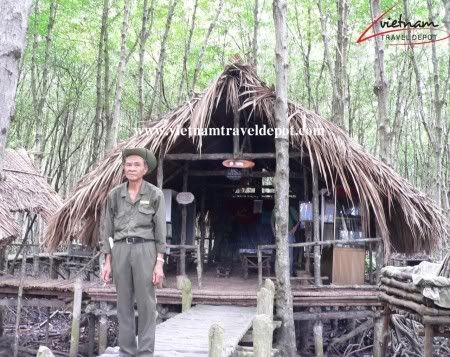
Before lunch, we take canoe to visit Mangrove Forest Ecosystem and the astounding Rung Sac Guerilla Base, which represents a page of Vietnam history.


Leave Can Gio Park to visit Whale’s royal tomb. Cross the river by Binh Khanh Ferry to return Ho Chi Minh City. End the trip.


( if you like this trip and wanna join with us, please visit www.vietnamtraveldepot.com or email us at sales@vietnamtraveldepot.com)

Jan 31, 2010

Cu Chi Jeep Tour by Vietnam Travel Depot (New, Extremely Hot!!!!)

At 10.00 am, from Saigon, we hopped on Jeeps and drove to Cu Chi Tunnels for a new hot adventure. Our “land - force” were tourists, operators from Vietnam Jeep Tours (Vietnam Travel Depot) and 11 jeeps (A1, A2).

Arrived Cu Chi Tunnels at 12.00 am, everyone was too exciting to wait for discover Tunnels – an amazing complex of underground tunnels used during the Vietnam War – the Viet Cong’s Under World: an elaborate underground community made up of 250 km of tunnels and chambers below the city and which was built with simple tools and bare hand.

Here are some real photos and video clip from this jeep tour. Hope you love this and will join us some days!

Hope you love this and will join us some days!

Vietnam Jeep Tours (Vietnam Travel Depot)

The only one who makes everything different with Jeeps!

Ph: +84 98 924 5868

sales@vietnamtraveldepot.com

Jan 18, 2010

Five more luxury hotels operational in Hanoi for National Tourism Year


Hanoi plans to put into operation five more luxury hotels, offering an additional 2,000 rooms during National Tourism Year 2010.

They include four five-star hotels, namely Hanoi Plaza, with 600 rooms, the PetroVietnam hotel complex with 350 rooms, Keang Nam Vina complex with 500 rooms and Crowne Plaza Hanoi, 393 rooms.

The city now boasts 213 hotels with nearly 10,000 rooms, including 36 three to five-star hotels.

Last year, the room occupancy rate was 55.41%, a fall of 21.7% compared to 2008.

The average duration of stay was 2 days per foreign tourist who came from major markets as Japan, the Republic of Korea, France, Australia, China and ASEAN countries.

The city’s tourism sector expects a surge in the number of foreign tourists during the national tourism year, helping raising the rate of hotel room occupancy.

(Source: VNA)

Dec 8, 2009

Cam Ranh to become international airport


Cam Ranh Airport in the central coastal province of Khanh Hoa will become an international airport with the opening of an official direct air route linking Cam Ranh and Vladivostock in Russia on December 12.

This was announced at a recent working session between Chairman of the Khanh Hoa provincial People’s Committee Vo Lam Phi, leaders of the Minh Nhat Ltd.Co. and representatives of Russia’s Vladivostock Avia and Transero Airlines.

Under the agreement, TU204 aircraft will be used for a flight every two weeks and the flight frequency will be increased later. Another air route will also open for flights from Moscow to Cam Ranh and vice versa.

Mr. Phi also asked hotels and guest houses to offer promotion programmes and lower service prices on the occasion of the inauguration of Cam Ranh international airport.

Travel agents’ hotels have pledged 50-70% discount in hotel room prices for nearly 130 international tourists flying from Russia to Cam Ranh on December 12.

The national aviation sector invested more than VND200 billion in building a new terminal, air traffic control station, a modern runway lights and other facilities in Cam Ranh Airport.

The capacity of the new terminal doubles the old one, which was only capable of loading 300 passengers per hour.

(Source: VNA)

Food fest to bring slice of Hanoi to HCMC


HCMC residents will have a chance to savour authentic Hanoi cuisine and experience the rural ambience of northern Vietnam at a three-day event held to mark the 1,000th anniversary of Thang Long- Hanoi.

The “Thang Long Citadel cuisine in South Vietnam” Festival at Van Thanh Tourism Park would introduce "significant cultural traits and folk cuisine of the North," said Chiem Thanh Long, Director of Van Thanh Tourism Park. "We are getting ready a miniature of ancient Hanoi at the park."

The event, organised by the HCMC Department of Culture, Sports and Tourism will open on December 11. There will be a rural market, snack counter, temple festival, and traditional feast.

Visitors can enjoy delicacies like banh gai Hang Be (glutinous rice cake dyed black in a concoction of leaves made in Hang Be Street), banh gio Do Mang (pyramidal rice dumpling filled with meat, onion, and mushroom from a place called Madame Demange), banh com Hang Than (grilled cake of young rice in Hang Than Street), and banh tom (crisp shrimp pastry).

A death-anniversary feast and a wedding feast will be the highlights of the event.

"We will have artisans and officials from the Vietnam Cuisine Research Institute to make it a genuine northern feast," Long said.

"Every day we will serve only 40 tables of traditional feast, which will cost VND960,000 (US$52). Each table will have ten dishes serving six people."

Besides the food, daily Northern Vietnamese life will be depicted, including a market with street vendors in traditional costumes and calling out to passers-by, an exhibition of Vietnamese wines, and an exhibition of paintings and books about Thang Long, the country’s ancient capital.

Huynh Van Son, a department representative, said northern folk games would be on display, including Chinese chess, water puppetry, and wrestling.

There would be performances of ca tru (ceremonial singing), quan ho (love duet), hat xam (songs of an itinerant blind musician), and hat xoan (folk workship singing of Phu Tho Province), he added.

Around 8,000 visitors were expected at the festival, Long said. It will run from 4pm to 9pm on each of the three days.

(Source: VNS)

Nov 25, 2009

Nguyen-era items show in Hue


Forty-eight relics from the Nguyen Dynasty era donated by private collectors to the Hue Royal Fine Arts Museum are on display at the former royal capital’s An Dinh Palace. The Hue Royal Fine Arts Museum, run by the Hue Historical Relic Preservation Centre, houses a large collection of relics from the time of Vietnam’s last imperial dynasty, which ruled from 1820 to 1945.

The objects on show at the exhibition, organised by the museum, are mostly made of silver, brass, precious stones, porcelain, silk, wood and paper.

Among them are a pair of ivory tusks donated by a Vietnamese expatriate living in France, a tea set gifted by Doan Phuoc Thuan, a collector in the central coastal province of Phu Yen, and a collection of King Minh Mang’s poems written on paper donated by Frenchman Andre de Crozet.

A set of three life-size brass statues of Jesus’s mother Mary, donated by a Hue-based company, is among the most valuable relics on show.

At the time of the exhibition’s opening, Nguyen Huu Hoang donated a porcelain basin and plate, Le Gia donated a land register, and a group of collectors presented a pair of vermilion-lacquered gilded wood panels.

The exhibition will go on until the end of the year.

(Source: VNA)

Nov 15, 2009

Cu Chi Tunnels Adventure with Jeeps by Vietnam Travel Depot ( Vietnam Jeep Tours)

This is one of our interesting trip: ( if you like this trip and wanna join with us, please visit www.vietnamtraveldepot.com or email us at sales@vietnamtraveldepot.com)

In this tour, our group included our drivers and tour operators with 16 French tourist.

In this morning, at 7:30 AM our jeeps arrived early to stick the numbers on each jeeps then we pick up the tourist at their hotel and let jeep to the extraordinary Cu Chi tunnels, just outside Ho Chi Minh City.


On the way to Cu Chi, we stopped for a while to take photos of Notre Dame Cathedral and Post Office ( which were built during the French Colony). Then we jeep straight to Cu Chi Tunnels to start our adventure in Underground World.


During the war for independence, Viet Cong guerrillas built the labyrinth of narrow tunnels virtually underneath U.S. bases, using them to hide during bombing raids and to stage surprise attacks. On the way to Cu Chi, we saw many cottages and beautiful fields which still only exist in Vietnam countryside.


At the end of this tour,at 1:30 PM, on the way to Saigon from Cu Chi, we had lunch at Ben Nay Restaurant. The food is delicious and the sights are very nice.

We arrived Saigon at 4:00 PM, a little bit late with the time we had planned before because there was traffic jam after the rain. Any way, this is really interesting trip. Hope you will enjoy this tour with us someday soon! :)

( if you like this trip and wanna join with us, please visit www.vietnamtraveldepot.com or email us at sales@vietnamtraveldepot.com)

Bonus: Our "soldiers" Jeep on the way and parking at Cu Chi.


Oct 29, 2009

Ancient tomb dated back 1,800 years unearthed

An ancient tomb with exterior and interior coffins has been unearthed in the northern port city of Hai Phong, according to the city’s museum.

The tomb was found by construction workers who were digging into the Thanh Den Mountain’s side to expand the acreage of the Tan Phu Xuan cement plant.

The exterior coffin is made from large pieces of ironwood while its boat-shaped interior coffin is carved out from a big tree trunk, a style belonging to the Dong Son culture, which existed more than 2,000 years ago.

No vestiges of bones were found except a rush map used to cover the dead.

Archaeologists also found seven large trays, four human statues, plates, bowls and combs, all made from wood, and several terracotta pots, jars and bowls with beehive and line patterns.

According to archaeologists from the Hai Phong Museum , the tomb is believed to date back to the 2nd-3rd centuries AD or 1,800 years ago.

(Source: VNA)

Oct 21, 2009

Cultural features of Cu Da ancient village


Cu Da Village is located in Cu Khe Commune, Thanh Oai District, Hanoi. It is considered as one of the two most ancient villages in the former Ha Tay. Its ancient and tranquil beauty attracts many tourists and researchers both in and outside the country. Cu Da Village is really a symbol of Vietnamese ancient villages in the northern delta areas and it also hides cultural sediments of great values that have still been kept intact today.


Cu Da ancient village, an attractive tourist destination in Hanoi
Cu Da Village is located on the bank of the Nhue River, about 15 kilometres from center of Hanoi, bearing characters of a Vietnamese village with hundred-year-old banian-trees, rivers, ponds, village wells and ancient mossy walls.

Cu Da villagers still keep traditional and neighbourly lifestyle which has been maintained from generation to generation. So, once visitors coming Cu Da, they will find it easy to inquire the way to some family in the village. This is really a respectfully cultural feature of Cu Da people.

In the 1920s, 1930s, thanks to the favourable location ‘close to the market and the river’, Cu Da was a very busy place for traders to do business all day and night. As a result, Cu Da village’s economy was developed rapidly and the living standard of villagers was improved considerably compared to other regions. Cu Da villagers moved to all regions in the country to do business and settle down there. Some people who were better off had come back to the home village and brought along with them the cultural characters from the city. Houses with the western architectural style mixed with traditional art were built. These were communal houses built under the French-style so that villagers could gather together and make decisions on things of common concern. Each house was numbered like in a big city. Cu Da is among a few Vietnamese villages whose houses were numbered. This has made it so unique, rarely seen in any village in the northern delta area.

The cultural features of Cu Da have been preserved intact which serve as an evidence of a flourishing development period. The most remarkable relics in Cu Da are 50 French-style villas. Partly damaged by time and historical changes as they were, these houses are still kept intact with typical French style. These are two-storey villas with balcony, archway, enamel tile-paved pillars, porcelain-paved walls and so on. Tiles to pave and decorate houses were all made in France in 1910 – 1920 and imported to Vietnam. Architectural patterns and designs of these houses remain, showing the harmony between eastern and western architecture in the early years of the 20th century.

Not only bearing European-style architecture, Cu Da is also imbued with traditional values of a riverside village in the northern delta area.

These were ancient Vietnamese houses and houses of worship built one century ago. These iron wood houses with delicate carvings still stand there to the test of time. The most remarkable house is the ancient house of Trinh The Sung built in 1874 under the Tu Duc’s reign. The house features the typical architectural art of the Nguyen Dynasty as it was made entirely from timber with sophisticated patterns on its doors.

The cultural characters of Cu Da ancient village are also showed through other constructions like temples, pagodas and shrines. Cu Da temple is one of two relics of Cu Da Village recognised as the nation’s historical site. Xa Tac Worship Ritual was set at Cu Da Temple to offer sacrifices and considered as the most beautiful worship place preserved until today. This place of worship dates back to 1921, made from precious stones carved with dragons and symbols of four sacred creatures: dragon, unicorn, tortoise and phoenix. Xa Tac Altar is not only used for the worship of the God of Land and the God of Farming, but it also implies typical features of a historical period in the past.

Cu Da Village is also famous for other ancient communal houses which are used to celebrate common activities and festivals of the whole village.

Such unique relics on a flourishing development period of Cu Da riverside ancient village have made it a ‘must-see’ tourist destination, attracting an increasing number of visitors and researchers in and outside the country.

(Source: Nhan Dan)

Oct 2, 2009

Non-stop travel between Vietnam and Cambodia

From September 30 all vehicles will have freedom of movement between the Samat international border gate in Tay Ninh Province in Vietnam and the TrapeangPlong border gate in KamPongCham Province, Cambodia.

This is the second international border gate to be put into use by the two countries. The first, Moc Bai-BaVet, started operating in September, 2006.

Speaking at the opening ceremony, Vietnamese Deputy Minister of Transport Le Manh Hung praised the cooperation shown between the transportation sectors of both countries for their efforts to implement the Agreement on Road Transportation signed by both governments.

As a result, seven border gates connecting the two countries are now in operation. Both countries have opened up their borders so vehicles do not have to stop, which saves time, cuts costs and boosts trade, tourism, and investment.

Deputy Minister Hung and his Cambodian counterpart Takch ChanKosal also agreed that both countries should make more effort to exchange information, manage transport links and work together to make it easier to travel between both countries.

(Source: VNA)

Sep 30, 2009

Folk music is a mere phone call away


At a time when the modern music industry in Viet Nam is producing mostly flash-in-the-pan pop stars, modern technology is starting to prove convenient in keeping traditional music alive.

The 87 - year - old lady is performing folk songs on mobile

Fans of quan ho (love duets from the northern province of Bac Ninh) no longer need to visit the province to enjoy live performances of this ancient folk music.

Now the music is just a phone call away.

Thanks to such clubs as the Hoa Dinh Club in Hoa Dinh Village, Bac Ninh City, quan ho fans can dial in to listen to their favourite love songs, performed live by well-known singers.

With modern technology often distracting from the country’s traditions, it’s a refreshing change to see it help promote an ancient art form for Vietnamese everywhere.

The Hoa Dinh Club’s head, Tran Van Quyen, says most customers who phone in requesting songs are overseas Vietnamese and people in other provinces.

"It all started at a quan ho singing competition and festival in Spring 2008," he recalls.

During the festival, the club’s artists met with many tourists who said they wanted to enjoy these folk songs from home.

"At the end of the festival, we returned to our day jobs. The quan ho singers of Hoa Dinh Village continued to practise every Saturday evening.

"One day, some of the tourists who had my mobile phone number called me, saying that they wanted to enjoy some songs. We couldn’t refuse their passion for the music," he says.

At present, the club has 51 members, including elder, middle-aged and young people. The oldest member Nguyen Thi Bay is 85, but she still isn’t too old to teach young people how to properly sing the classic melodies.

Bay and other club members are ready to sing via mobile phones to fans, free of charge.

"The most important thing that we gain is that we can popularise the culture of quan ho and images of quan ho artists who are friendly and hospitable to people both in the country and abroad," he says.

"We don’t join the club for money," says artist Nguyen Thi Ly. "We are determined to preserve the ancient folk songs and we want the songs to be handed down to future generations."

The director of Bac Ninh Province’s Culture, Sports and Tourism Department, Dang Van Tuc, said the service has received a lot of attention.

"This service also helps popularise quan ho to the world. We want quan ho to be recognised one day as a UNESCO heritage. During this time of international integration, people all over the world can simply pick up their cell phones and listen to songs by famous singers."

Recognising the potential of wireless communication, the department has asked the provincial People’s Committee to give each quan ho club a mobile phone to help boost this service.

For many old people living in rural villages, mobile phones have been an unaffordable luxury, but there has been a recent spike in the number of elderly with mobile phones.

According to artist Nguyen Thi Thuy, quan ho is an acquired taste, and not everyone wants to listen to these old folk songs.

"That’s why we the quan ho singers always respect the requests of people who really want to listen to the songs. Among them, many are overseas Vietnamese who visited the homeland but didn’t have a chance to visit Bac Ninh," she says.

During the summers, the club also organises classes to teach quan ho to children in the village.

Other than the Hoa Dinh Club, many other clubs have been formed, attracting new performers and fans. They include clubs in Dao Xa Village in Phong Khe Commune, Bac Ninh City, and Diem Village in Hoa Long Commune.

The Ministry of Culture, Sports and Tourism is completing files on quan ho to submit to UNESCO, asking the organisation to recognise the music as an intangible part of their culture.

Just as modern technology seems to facilitate cheaply produced music, this original use of cell phones proves that tradition does not have to be traded for modernity. This also proves that quan ho culture still has a strong presence.

Club telephone numbers

The following clubs provide live performances on Saturday evenings. Fans can listen in by calling:

Hoa Dinh Club in Hoa Dinh Village, Bac Ninh City
095 372 3234

Dao Xa Village Club in Phong Khe Commune 0241 246 329

Diem Village Club in Hoa Long Commune 0241 862 092


(Source: VNS & VietNamNet Bridge )
Sep 28, 2009

To he – an attractive folk toy (Tò He)


To he is one of the rare folk toys of Vietnamese children remaining until today. Xuan La Village in Phuong Duc Commune, Phu Xuyen District, Ha Noi (former Ha Tay Province) is often mentioned as one of originated places of making to he (kneading coloured dough into coloured paste animals).

To He (image source: tin247.com)

Almost of all villagers (80%) in Xuan La know how to make to he. White-haired old people and even children who have not gone to school also can make to he. Derived long time ago, but nobody knows who was the ancestor of making to he (this is explained that since the loss of documentation). Besides, the village has many families such as: Dang, Nguyen, Vu, Le, Chu, Trinh... all of these families know well how to make to he. Thus, all deserve the title of ancestor of making to he.

The stage of making dough is the main secret formula of the profession. If this formula is not good, when the powder dry it will rub off very easily and break out of stick. The main ingredient for making to he is ordinary rice and a little of glutinous rice flour. It is mixed at the ratio of 10 parts of rice contain 1 part of sticky rice (this ratio may change depend on the hot and dry weather), well-blend, cover with water then pureed, boil and quick knead. After that, this flour is squeezed into some wisps and each wisp is dyed respectively.

Four basic colors are yellow, red, black, and green. In the past, people use colors derived from plants and boiled with a little flour: yellow made from hoe flower or turmeric, red from gac fruit or gardenia, black from burned-straw or dyer's weed, green from indigo leaves or rieng leaves... Other intermediate colors are created from these four colors.

To he attracts strangely not only young children but also many people of all ages. Perhaps, distinctions that create special appeal of to he is just only with a little of colored dough and a bamboo stick about 40cm in length, the artisan with talented hands has made pictures in the imagination became a reality in some minutes. To see the most attraction of this game, one should follow each skilful act of rolling and kneading of the artisan. Audiences palpitate with the artisan’s hands as a magic when products finish. Each to he always causes curiosity and admiration for all people on creativeness of the artisan.

Today, artisans make to he not only with traditional shapes of animals, fruits, but also with many others of abundant in shapes, especially cartoon characters that children love such as Doraemon, Pokemon, Sailor Moon, Superman…, and industry food colors are used for their more convenient.

With a simple tool set consists of a small knife, a few bamboo sticks and a little beeswax, the artisans of making to he go to many villages all over Viet Nam on market-days, festivals, to sell their products. Nowadays, to he appears not only at the village festivals, parks, schools but also at hotels, trade fairs, important national and international cultural, social, sports and tourism events...

Tò He with dragon shape (image source from chudu24.com)

To he is considered as a unique folk toy, which brings both national and scientific characters. It also plays an important role in life, learning, entertainment activities and aesthetic training for children. To he is a toy which children often pick for them in many occasions, especially every time the Mid-Autumn Festival arrived.

Phuong Anh
(Source: TITC)